


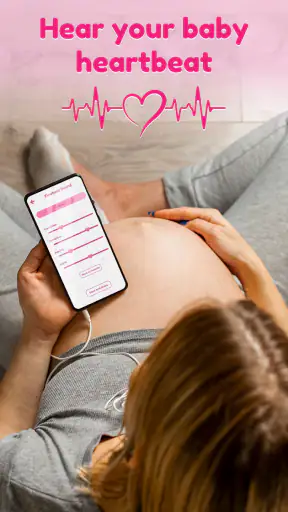
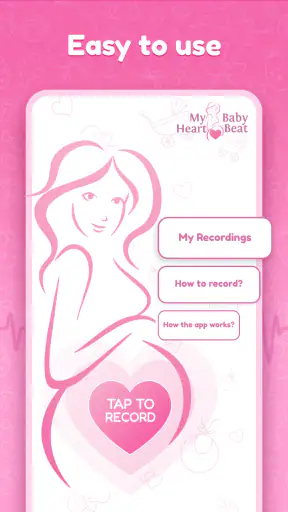
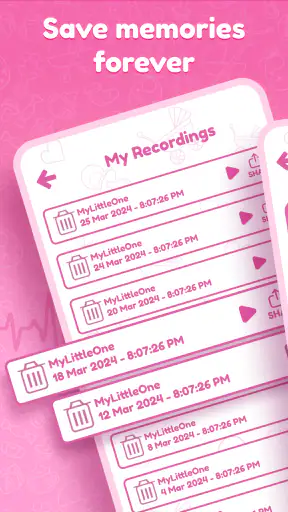
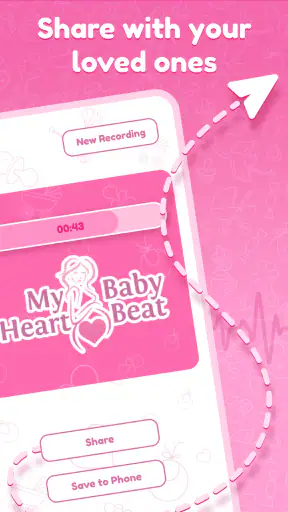
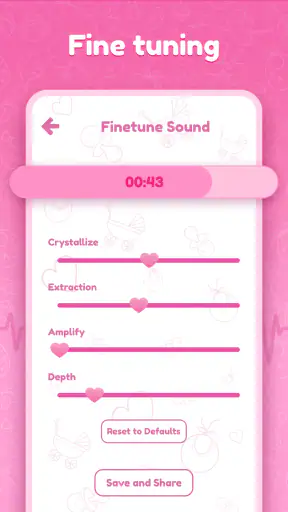
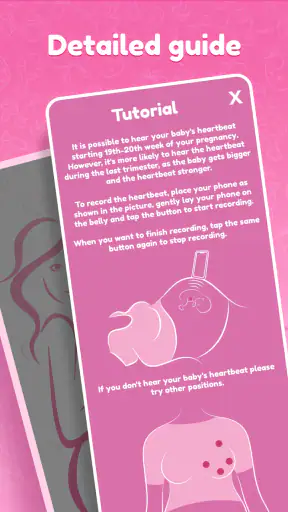
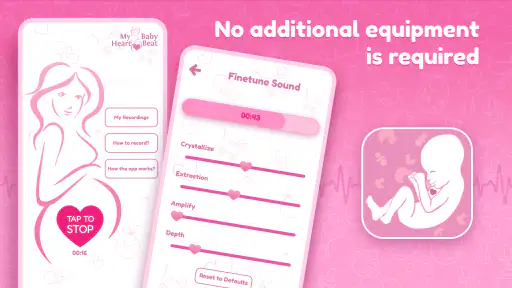
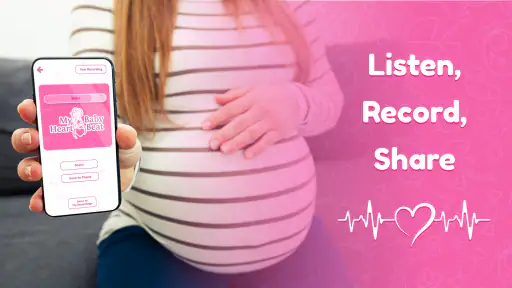
Hear My Baby Heartbeat Monitor is the kind of parenting app that immediately appeals to the emotional side of expecting a child. I installed it with the idea of seeing whether it could fit into ordinary household routines, not just serve as a quick novelty. Its central purpose is simple: it is designed to help capture and listen to a baby’s heartbeat sounds through a phone. That makes it interesting for parents who want a personal keepsake or a quiet way to share a special moment at home.
My first impression was that this is best understood as a personal listening and memory-making app, not as a medical instrument. That distinction matters more than the attractive concept. A phone microphone and an app can be convenient, but they should never replace prenatal appointments, professional monitoring, or advice from a midwife or doctor. Used with that boundary in mind, the app has a clear place in a family’s routine. Used as a source of reassurance about a baby’s health, it becomes the wrong tool.
How it fits into a shared household
The most natural scenario is a shared-device moment. One person may be farther along in pregnancy while a partner, grandparent, or older child wants to feel included. Instead of passing around a medical report or trying to explain what a clinical monitor does, the family can gather around the phone and listen together. I can see this working especially well during a calm evening when everyone has time to focus, rather than during a rushed morning.
That shared use also reveals an important practical detail: the phone becomes part of the experience. The person holding it has to stay still, keep the environment reasonably quiet, and avoid treating every sound as meaningful. In a busy home, that can be harder than expected. Television, conversation, kitchen noise, and movement can all turn a short listening session into a frustrating one. I would choose a quiet room and make sure the device has enough battery before beginning.
For a household with one phone used by several people, the app is easy to frame as a family activity rather than a private health dashboard. There is no reason to hand the device to a child without an adult explaining what the sound means and what it does not mean. Young children may assume that hearing a sound automatically proves everything is fine, while not hearing one may cause unnecessary worry. The adult’s explanation is therefore just as important as the app itself.
I also found that the emotional value depends on expectations. If I approach it as a way to create a meaningful audio memory, the experience feels gentle and worthwhile. If I expect a result every time, the same session can become tense. Babies move, body position changes, and home conditions are not controlled like a clinical setting. A failed attempt is not automatically a warning sign, and a successful recording is not a medical clearance.
What I would do before handing over the phone
I would prepare the session first, then invite other people to listen. That means silencing avoidable distractions, choosing a comfortable position, and deciding who will hold the device. This small bit of planning prevents the common household problem where several people talk at once, touch the phone repeatedly, and then wonder why the result is unclear.
For grandparents or relatives joining remotely, I would treat any captured sound as something to share personally rather than as a replacement for a proper update from the expectant parent or healthcare professional. The app can help create a connection, but it should not become a source of medical interpretation among family members. That is one of the most important boundaries I would establish from the beginning.
Another useful habit is to agree on when the app will and will not be used. A family could reserve it for occasional keepsake sessions instead of opening it every time anxiety appears. That approach protects the emotional side of the experience and avoids turning a simple app into a repeated test. In my view, this is a better workflow than keeping it constantly available as a reassurance button.
Setup, device boundaries, and everyday handling
Hear My Baby Heartbeat Monitor is a free parenting app from App Bards. It is listed for Everyone and works on devices running Android 8.0 or later. Those details make it approachable for households that share an older compatible phone, although the practical experience will still depend on the device’s microphone, speaker, battery condition, and general performance.
Because it is used around a sensitive family moment, I would set up the app on the device that will actually be present during the session rather than assuming every phone will behave the same way. A newer phone may handle sound more comfortably than an older one, while a case, a damaged microphone, or a noisy room can affect the experience. This is not a reason to buy a new device, but it is a reason to test the household phone before planning a special listening moment.
Shared-device use deserves a little thought. If several adults use the same phone, the person who starts the session should remain responsible for the interpretation and storage of anything captured. I would avoid leaving the app open when handing the device to a child, and I would not let a casual family member turn the session into a game. The app’s subject is too personal for careless handling, even though the interface itself may feel simple.
There is also a useful distinction between access and ownership. A partner may help operate the phone, but the pregnancy-related experience belongs primarily to the person carrying the baby. That person should decide when the app is used, who listens, and whether anything is kept or shared. In a household, this kind of consent is more valuable than any convenience gained by making the app permanently available to everyone.
I would also keep the volume moderate and use a comfortable listening environment. A loud speaker does not make a weak or unclear result more trustworthy. It only makes the room louder. If the goal is to preserve a memory, a quiet setting and a short, calm session are more sensible than repeated attempts at maximum volume.
Where the app sits beside ordinary alternatives
The usual alternative in this category is not another phone app; it is professional prenatal care. A clinician has training, context, and equipment that a consumer application cannot provide. A medical appointment can evaluate far more than a sound, while this app is mainly attractive because it is available at home and can involve other people emotionally.
There are also dedicated home listening devices, but those introduce their own considerations, including cost, storage, learning curve, and the temptation to use them too often. A free phone app is easier to try and easier to keep on a shared device. That convenience is its strongest advantage. Its weakness is that the phone is not designed to provide the same controlled environment or professional interpretation as clinical equipment.
Compared with simply recording a voice message or taking a pregnancy photograph, the app offers a more distinctive keepsake. Compared with a medical visit, it offers much less reliable information. I would choose it for occasional family connection and personal memory-making, not for deciding whether a pregnancy is progressing normally.
Coordinating the experience without creating pressure
One of the app’s better household uses is coordination. A partner who cannot attend every appointment may appreciate being present for a quiet listening session. A relative may enjoy hearing a recording later. However, coordination works best when it is planned around the expectant parent’s comfort, not around everyone else’s curiosity.
I would suggest agreeing on a simple routine: one adult prepares the room, the pregnant person decides whether the timing feels right, and everyone else listens without demanding a result. This turns the session into a shared ritual instead of a performance. It also prevents the person using the phone from feeling responsible for producing a sound on command.
For families with different schedules, the app can be part of a broader update routine. Someone might listen in person while another relative receives a message afterward. I would keep the message personal and avoid presenting the recording as proof of health. A short note such as “we had a special listening moment today” is safer and more accurate than making medical claims based on a home recording.
The same principle applies when older siblings are involved. An adult can explain that the baby’s sound may be difficult to hear and that this does not mean anything is wrong. The child can be invited to listen once, ask questions, and then move on to another activity. That keeps the experience positive without making the child monitor the pregnancy.
A less obvious benefit of this approach is that it reduces repeated handling of the phone. When a whole family tries to operate the app at once, the device gets passed around, the position changes, and the session becomes less consistent. One designated adult makes the process calmer. If the result is unclear, I would stop rather than turn the evening into a long troubleshooting exercise.
When a different option is the better choice
I would skip this app if the main reason for installing it is persistent anxiety about the baby’s wellbeing. In that situation, speaking with a healthcare professional is the better next step. The app cannot answer the questions that cause serious concern, and repeated home listening may increase worry instead of reducing it.
I would also avoid relying on it when a family needs a dependable record for clinical discussion. A professional appointment is more appropriate for that purpose. The app may create a meaningful personal recording, but that is different from producing a medically useful assessment.
It may not suit households that dislike shared-device handling or that need clearly separated personal accounts for different family members. I would not assume that a family phone automatically creates private boundaries. The safest approach is to decide who may use it and to keep the experience under the control of the expectant parent.
Finally, people who want a precise, repeatable technical result may be disappointed by any casual smartphone-based approach. The attraction here is accessibility and intimacy, not laboratory-style consistency. That trade-off is acceptable for a keepsake, but not for someone seeking certainty.
Age context, trust, and responsible use
The Everyone rating makes the app broadly accessible, but age suitability is not the same as medical understanding. A child may be allowed to see the app while still needing an adult to explain its purpose. I would never leave a young child to decide what a result means, especially if the sound is faint, absent, or unfamiliar.
Trust is central to the experience. The app invites users to trust a phone with an emotionally important moment, so the family should also trust its own boundaries. The person who is pregnant should not feel pressured to use it for visitors, relatives, or social sharing. A private experience is completely valid, and the free price does not make access an entitlement for everyone in the household.
The app’s popularity suggests that many people find the idea appealing: it has a 4.4 average from around 19 thousand ratings and more than a million installs. Those figures help explain why it attracts attention, but they do not change the basic safety rule. Popularity can show that an app resonates with users; it cannot turn a consumer tool into a clinical device.
The release date and current software version also make it sensible to keep the app updated through the normal store process. I would check that the household phone is compatible before planning a shared session, since the minimum requirement is Android 8.0. On an iPhone or another unsupported setup, I would not assume the same experience is available simply because the concept sounds familiar.
As a free app, it is easy to try without committing money, which is helpful for families who only want occasional use. At the same time, free access can encourage people to install it impulsively and use it without thinking through the emotional consequences. I would discuss the purpose first: a keepsake and shared moment, not a substitute for care.
My practical routine for using it
I would begin by choosing a quiet time and asking whether the expectant parent actually feels like using it. Then I would place one person in charge of the phone, keep other family members from crowding the device, and give the session a natural stopping point. If the sound is unclear, I would not repeatedly reposition the phone for a long period or interpret the result alone.
If a recording feels meaningful, I would label it with a simple personal note rather than a medical conclusion. That makes it easier to remember the occasion without confusing memory-keeping with health tracking. I would also think carefully before sharing it outside the household, since pregnancy-related recordings can be more personal than they first appear.
This routine highlights the app’s real strength: it can help turn a private pregnancy moment into something a partner or family member can experience together. Its real limitation is equally clear: the phone cannot provide the context, reliability, or professional judgment that people may unconsciously expect from the word “monitor.”
My household verdict
After looking at it as a shared household tool, I see Hear My Baby Heartbeat Monitor as a gentle, limited app with a specific purpose. I would recommend it to an expectant parent who wants an occasional emotional keepsake and understands that home listening is not prenatal care. I would also recommend setting expectations before involving partners, grandparents, or children, because the experience works best when everyone treats it respectfully.
App Bards has positioned the product in an accessible part of parenting technology: it is free, aimed at Everyone, and available for compatible Android devices beginning with version 8.0. The current version is 1.2.4, and its broad reach shows that the idea connects with a large audience. Still, none of those conveniences remove the need for calm judgment.
My bottom line is simple: use it for connection, not confirmation. If you want a small family ritual or a personal sound memory, it may be worth trying. If you want dependable reassurance, diagnosis, or a replacement for an appointment, choose professional care instead. That boundary makes the app more useful, not less; it lets the emotional experience remain special without asking a smartphone to do a medical professional’s job.
For my own household recommendation, I would keep it as an occasional option on a shared device, with the expectant parent controlling access and timing. I would not make it part of a daily checking routine, and I would not let children or relatives interpret results independently. In that narrow but meaningful role, the app can add warmth to pregnancy. Outside that role, a different option is clearly better.


